In a time when not caring about elections is normal, voting can be a beautiful heresy.
Do I vote? Yes, always.
Challange the prevailing dogma, worry your pastor, upset the stuff, make a change in this world.
In a time when not caring about elections is normal, voting can be a beautiful heresy.
Do I vote? Yes, always.
There may well be a few accusations of heresy in the Anglican world after a big split.
Anglicanism, known in the UK as The Church of England, has split asunder. Prior to this split, the first among equals (essentially the leader) in the Anglican world was the Archbishop of Canterbury. That has now changed.
A large and more conservative element within The Anglican Communion (Gafcon) had formed their own thing within the wider stage of global Anglicanism. Very recently, they declared that they were the true Anglicans and those who remain under Canterbury were not. This kind of excommunicates the Church of England. That sounds an awful lot like an accusation of heresy to me.
What’s got Gafcon’s knickers in a twist are things like the appointment of a female archbishop because this is a boys-only club (no girls allowed) or something. They are also upset that Anglican vicars are allowed to be okay with same-sex marriages.
The issues which divide the global Anglican Communion included the ordination of women bishops in 2014 and the acceptance of same-sex relationships in 2023.
Many conservative Christians believe that only men should be consecrated as bishops.
The BBC giving a more balanced report if you like that sort of thing.
Choose your heresy – whichever side you pick, you’ll pretty much be something of a heretic to the other side. Gafcon have gone on record calling the current state of the Church of England “in apostasy”. To be an apostate is just a fancy way to say being a heretic.
Owners of dogs will have noticed that, if you provide them with food and water and shelter and affection, they will think you are god. Whereas owners of cats are compelled to realize that, if you provide them with food and water and shelter and affection, they draw the conclusion that they are gods.
Christopher Hitchens, The Portable Atheist: Essential Readings for the Nonbeliever
Now, that’s a heresy I can get behind.
Imagine that you and I are sitting in the pub on a Sunday afternoon. You turn to me and say, “Soon, but I can’t tell you when, I will give you half of everything I have, which will leave you the 98th richest man in the world.”
If I had doubts, would you blame me?
This is the problem that the doctrine of “you must believe to be saved” has problems. Belief is not something one chooses. Either you find a claim credible or you don’t.
Calvinism can get away with this teaching as it teaches that God’s grace is irresistible. That irresistible grace is predestined to be given to some. Thus, you or I believing is not something we had any say in and “you are saved by grace and not anything you did” holds true.
If you make salvation a choice, people choose hell or choose heaven by their belief or lack thereof. That’s not a choice. Saying the prayer to go to heaven is something I could boast about, but believing in the first place, not so much.
This is actually the problem of free will. If we have free will, there is nothing we can do to save ourselves; it has to be given to us. If we lack free will, salvation was out of our hands to begin with. Either way, there’s probably no choice involved.
Unless you subscribe to modern evangelical doctrine, and then it very much is your fault if you go to hell because of free will. Just don’t squint too hard at the logic there.
Feel free to show this to your evangelical pastor. I could use the exposure that being preached against would bring.
I found this brilliant bit of modern heresy from Thomas Weibel and had to share it.
![In the beginning God created heaven
[Accept hosts?]
and the earth. And the earth was without form
[Subscribe to free sermon?]
and void, and darkness was upon it
[Allow push prayers?]
the deep; and the Spirit of God
[Show additional apocrypha?]
hovered over the waters.](https://heresy.isbrill.com/wp-content/uploads/sites/41/2025/09/Screenshot-from-2025-09-16-15-28-19.png)
Reblog of: @streetartutopia@mastodon.online‘s post:
“Do not mistreat or oppress a foreigner – Exodus 22:21”
By Unknown in Charlevoix, Michigan.

At first look, a person who knows what they are talking about is indistinguishable from someone who only thinks they know what they are talking about.
Reading only websites that you agree with and calling it research is the intellectual equivalent of sucking your thumb. Sure, it’s comforting, but it is something you will have to grow out of before anyone will take you seriously.
Before adding an exciting new heresy to your collection, you should try to identify the bias of the one giving it to you. They may have something other than ideas they are really trying to push. You should know what that is before you jump in.
Identifying the bias of your sources is not always easy. It takes practice and leads to something some people call discernment.
I didn’t write any of these. I just found them with a quick search.
Reply with your bias identification tips.
I found some rich people’s heresy.
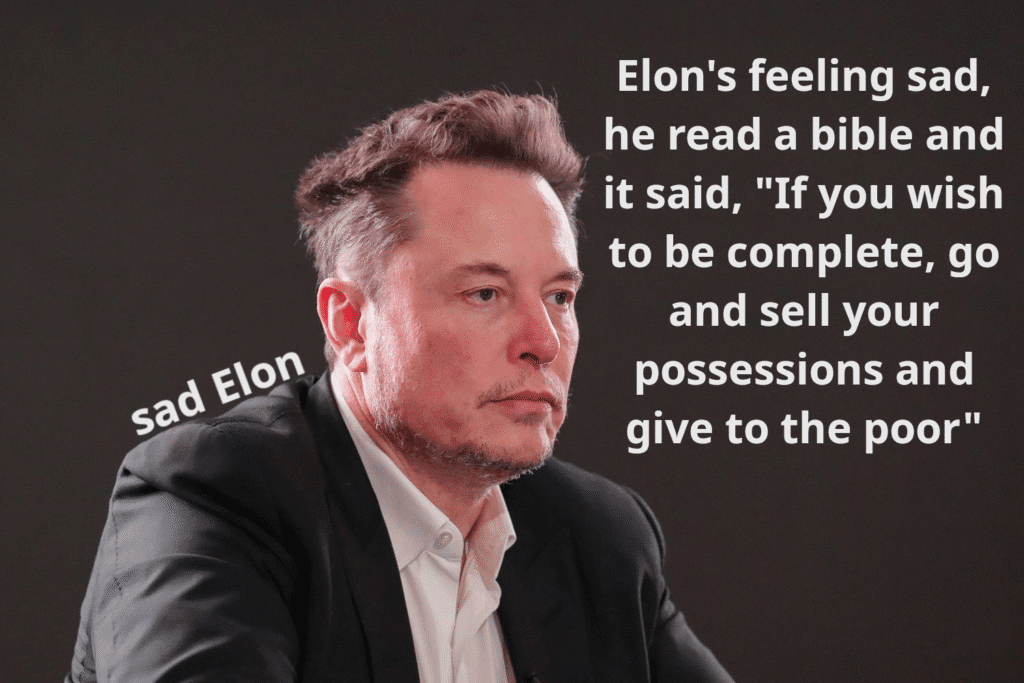
No matter which way you answer this question, someone is going to think you are a heretic. Welcome to the club.
We are, of course, talking about cessationism. The doctrine that God has ceased showing any power. The opposite is continuationism.
This may seem like a simple question, but whichever way you come down on this one, you will be a heretic to someone.
If this is your chosen heresy, then God no longer performs divine interventions. That stuff was just for the first disciples. You would be in the company of the Puritans, Calvinists, Dispensationalist Baptists, the confessional Reformed and Presbyterian, and much of the Anglican traditions on this one, which means that you are a heretic to both some modern movements and the orthodoxies.
You find yourself in the company of Catholic, Methodist, Moravian, and Pentecostal traditions of Christianity. Any group older than the Reformation is probably in agreement with you. However, the cessationists hold you to be a heretical dreamer.
Welcome to the other choice. You are now a heretic to almost every Christian. We’ll get the fire ready.